


Masakan Arab

Masakan Arab (Jawi: ماسقن عرب) ditakrifkan sebagai pelbagai masakan serantau di Dunia Arab yang menjangkau dari Maghribi dan Tunisia ke Yaman dan Somalia, dan menggabungkan Levant, Mesir dan yang lain. Ia juga dipengaruhi ke suatu tahap oleh masakan Turki, Afghanistan, Iran, India, Barbar dan budaya-budaya lain rantau itu sebelum Arabisasi kebudayaan dibawa oleh orang Arab mengikut salasilah sewaktu penaklukan Arab Islam.
Sejarah[sunting | sunting sumber]
Terdahulunya, orang Arab dari Semenanjung Arab banyak bergantung dengan diet kurma, gandum, barli, nasi dan daging, dengan sedikit kepelbagaian, dengan penekanan pada yogurt, seperti labnah (لبنة) (yogurt tanpa lemak mentega). Apabile kaum Semitik asli mula mengembara, sama juga dengan citarasa dan ramuan yang digemari mereka.
Ada satu penekanan kuat pada bahan-bahan berikut dalam masakan Arab:
- Daging: kambing dan ayam banyak sekali digunakan; daging lembu dan unta juga digunakan, tetapi tidak sebanyak kambing dan ayam. Ternakan lain digunakan di sesetengah rantau dan, di kawasan tepi pantai, diet juga termasuk ikan. Daging babi adalah sama sekali dilarang-untuk orang Arab Islam, ia adalah kedua-duanya pantang kebudayaan dan juga dilarang di bawah hukum Islam; banyak Arab Kristian juga tidak memakan babi kerana mereka tidak pernah memperoleh suatu citarasa untuknya.[1]
- Hasil tenusu: hasil tenusu digunakan secara meluas, kebanyakannya yogurt dan keju putih. Meskipun demikian, mentega dan krim juga digunakan secara meluas.
- Herba dan rempah: pudina dan daun thyme (sering dalam satu campuran digelar za'atar) digunakan secara luas dan hampir secara sejagat; rempah digunakan kurang daripada masakan India tetapi jumlah dan jenis biasanya berlainan dari rantau ke rantau. Sesetengah herba dan rempah termasuk bijan, safron, kunyit, bawang putih, jintan putih, kayu manis, dan sumak. Campuran rempah termasuk baharat.
- Minuman: minuman panas digunakan lebih daripada yang sejuk, kopi diteratas senarai, kebanyakannya di negara-negara Teluk, walaupun teh juga dihidang di banyak negara Arab. Di Mesir dan Jordan teh sebagai minuman panas lebih penting daripada kopi contohnya.
- Biji-bijian: nasi adalah asasi dan digunakan untuk kebanyakan hidangan; gandum merupakan sumber utama untuk roti, dan juga bulgur dan semolina, yang digunakan secara luas.
- Legum: lentil digunakan secara luas dan juga kacang fava dan kacang kuda.
- Sayur-sayuran dan buah-buahan: masakan Arab juga menggunakan sayur-sayuran seperti timun, terung ungu (terung), courgette (zukini), kacang bendi dan bawang merah; buah-buahan (secara dasarnya sitrus), sering digunakan sebagai perasa pembuka selera. Buah zaitun merupakan sebahagian besar ramuan masakan dan juga tambahan pada kurma, tin dan buah delima.
- Kacang: Buah badam, kacang pain, pistasyio, dan kacang walnut sering digunakan.
- Hijauan: parsli dan pudina masyhur sebagai perasa dalam banyak hidangan, sementara bayam dan Corchorus (digelar "molokhia" dalam bahasa Arab) digunakan dalam hidangan masak.
- Sos dan kuah: Sos yang termasyhur termasuk pelbagai penggabungan minyak zaitun, jus limau, parsli, dan/atau bawang putih, dan tahini (pes bijan). Labaneh, yogurt tanpa lemak, sering diperasakan dengan pudina dan bawang merah atau putih, dan diguna sebagai suatu kuah dengan pelbagai hidangan.
Ternayata, banyak daripada rempah yang digunakan dalam masakan Semenajung Arab juga jenis yang ditekankan dalam masakan India. Ini ialah suatu akibat perdangangan yang bergerak rancak di antara kedua-dua rantau, dan juga samanya dengan keadaan kini di negara-negara yang kaya dengan minyak, di mana banyak para pekerja Asia Selatan bekerja di negara Teluk Arab.
Budaya[sunting | sunting sumber]
Melayan tetamu dengan baik ialah sebuah ciri yang penting dalam pemasakan di Semenanjung Arab. Hidangan lazimnya mewah dan melibatkan ahli keluarga, perkongsian dan kemesraan di meja makan. Majlis makan formal dan kerayaan lazimnya melibatkan banyak kambing, dan setiap majlis juga melibatkan banyak kopi Arab.
Di rumah orang Arab Teluk biasa, tetamu akan dihidangkan makanan yang dikongsi bersama yang diletakkan di atas dulang besar, dengan nasi dan berlaukkan kambing atau ayam, atu kedua-duanya sekali ataupun lauk berasingan, diringi pelbagai jenis masakan sayur-sayuran berempah, dan kadang kala ditambah dengan sos tomato. Kemungkinan juga akan terdapat beberapa jenis makanan ringan yang dihidangkan sebagai iringan. Teh sudah tentunya akan mengiringi hidangan dan sentiasa diminum. Kopi juga akan dihidangkan.
Terdapat beberapa perbezaan kedaerahan dalam masakan Arab. Misalnya, mujadara di Syria atau Lebanon berlainan daripada mujadara di Jordan atau Palestin. Beberapa makanan seperti mensaf (makanan kebangsaan Jordan), terdapat hanya di negara tertentu dan jaring diketemu di negara lain.
Berlainan dengan masakan Barat, jintan manis digunakan dengan masakan daging dan juga dalam manisan seperti baklava. Pencuci mulut lain temasuk variasi puding beras dan tepung goreng. Campuran kacang tanah lazim digunakan sebagai inti manisan tersebut. Safron digunakan dalam semua masakan, daripada manisan, ke nasi, hingga ke minuman. Minuman buah-buahan juga popular di wilayah yang kering ini.
Struktur hidangan[sunting | sunting sumber]
Ada dua struktur asas untuk makanan di dunia Arab, suatu struktur sering khusus untuk bulan Ramadan.
Sarapan pagi[sunting | sunting sumber]
Kedai kopi biasanya menawarkan roti croissant sebagai sarapan. Sarapan pagi selalunya makanan ringkas dengan roti dan produk tenusu, da kadang kalanya jem, yang diiringi teh. Yang paling biasa ialah labnah dan krim (kishta diperbuat daripada susu lembu); atau gaimar daripada susu kerbau. Labnah dihidang dengan buah zaitun, daun pudina kering dan direnjis dengan minyak zaitun. Kadang kalanya pastri seperti manaqeesh, sfiha, fatayer, dan kahi juga dimakan pada waktu sarapan. Roti leper yang dimakan dengan minyak zaitun dan za'tar juga popular.
Walau bagaimanapun, secara tradisionalnya, sarpan pagi merupakan makanan yang lebih berat terutamanya bagi pekerja. Hidangan termasuk sup lentil (shorbat 'adas), atau manisan berat seperti knafa. Foul, yakni kacang fava yang dimasak dengan kacang kuda, bawang putih, lemon dan minyak zaitun, juga popular sebagai hidangan buat sarapan orang yang bekerja.
Makan tengah hari[sunting | sunting sumber]
Makan tengah hari dianggap makan utama dan secara tradisinya dimakan selepas sembahayang Zohor. Ahli keluarga berkumpul bagi menikmati juadah dan lazimnya jika membuat jemputan makan, tetamu dijemput untuk makanan waktu ini.
Makan tengah hari selalunya tidak mempunyai banyak hidangan berasingan; namun, salad dan maza dihidangkan selain hidangan utama. Makanan utama pula terkandung daripada daging, ayam itik, dan ikan, nasi, lentil, roti dan sebahagian sayur-sayuran yang dimasak.
Minuman tidak semestinya dihidang sekali dengan makanan.
Makan malam[sunting | sunting sumber]
Secara tradisinya, makan malam merupakan makan yang paling ringan mahupun dengan peredaran zaman dan gaya hidup moden makan malam sudah bertukar menjadi makan yang bertambah penting.
Makanan Ramadan[sunting | sunting sumber]
Tambahan pula pada dua makanan yang disebut disebut selepas ini, sewaktunya gula-gula Ramadan dimakan lebih daripada yang lazim. Gula-gula dan buah-buahan segar dikhidmat di antara kedua-dua makanan ini. Walaupun kebanyakn gula-gula diperbuat sepanjang tahun seperti knafeh, baklawa dan basbousa, sesetenah dibuatkan khususnya untuk Ramadan seperti Qatayef.
Hidangan berbuka puasa[sunting | sunting sumber]
Hidangan berbuka puasa atau iftar), biasanya mengandungi tiga jenis hidangan: Pertama, buah kurma dalam bilangan ganjil sesuai dengan tradisi Islam. Kemudian sup dihidangkan (popular sup lentil) dan hidangan ketiga merupakan hidangan utama, biasanya dimakan selepas sembahyang Maghrib.
Hidangan utama sama dengan makan tengah hari, akan tetapi makanan diiringi minuman sejuk.
Suhur[sunting | sunting sumber]
Adalah makanan yang dimakan sebelum subuh apabila waktu berpuasa harus dimulakan.
Masakan Arab Serantau[sunting | sunting sumber]
Negara-negara Teluk[sunting | sunting sumber]
Pada asalnya, masyarakat Arab di Semenanjung Arab amat bergantung pada diet kurma, gandum, barli, beras dan daging, dengan sedikit kelainan, dengan memberi penekanan kepada produk yogurt, seperti leben (لبن) (yogurt tanpa lemak susu). Sebagai orang asli Semitik semenanjung mengembara, begitu juga dengan selera mereka dan bahan-bahan yang digemari.
Masakan Teluk Parsi hari ini adalah hasil daripada gabungan masakan yan beraneka dengan menggabungkan masakan Lubnan, masakan India, dan bahan-bahan yang bukan berasal dari kawasan Teluk Parsi, yang diimport pada dhow dan kafilah. Terdapat beberapa penekanan yang kuat terhadap perkara-perkara berikut dalam masakan Arab seperti biri-biri, yogurt, pudina, thyme (selalu dalam campuran yang disebut za'atar), teh yang tidak dapat dielakkan (lebih baik Ceylon), bijan, serbuk kari, koma-koma, kunyit, bawang putih, jintan putih, kulit kayu manis, beras (makanan ruji), dan ikan. Di samping itu, masakan itu tertutup rapat dengan sesuatu yang panas, dari kuah panas kepada pelbagai lada, kepada teh yang diminum yang lebih panas adalah lebih baik. Masakan ini juga berperisa sayur seperti timun, terung, bawang, dan buah (terutamanya jeruk), dan sering digunakan sebagai perasa untuk pembuka makanan. Secara khususnya, banyak daripada rempah-rempah yang sama digunakan dalam masakan Arab juga ditekankan dalam masakan India. Ini adalah hasil daripada perdagangan antara kedua-dua wilayah, dan dari sudut semasa hal ehwal dalam negara-negara minyak yang kaya, di mana ramai pekerja dari Asia Selatan tinggal di luar negara terutamanya di negara-negara Teluk.
Mesir[sunting | sunting sumber]

Masakan Mesir mempunyai kategori tersendiri. Ianya berbeza dengan masakan sekitar Arab, yang memberi lebih memberi penekanan pada daging, masakan Mesir kaya dengan makanan vegetarian; kedua-duanya makanan asasi Mesir, Ful Medames dan kushari secara umumnya adalah vegetarian.
Maghribi[sunting | sunting sumber]

Rempah digunakan secara meluas dalam masakan Arab barat. Berbeza dengan negara lain di dunia Arab, daging merah yang paling umum adalah daging lembu. Walau bagaimanapun, biri-biri masih merupakan daging pilihan, hanya dielakkan disebabkan oleh kos yang lebih tinggi. Produk tenusu kurang digunakan berbanding dengan negara-negara lain di dunia Arab.
Antara yang paling terkenal adalah masakan Tunisia, Maghribi dan Algeria adalah kuskus, pastilla (juga dieja sebagai bsteeya atau bastilla), tajin, tanjia dan harira. Walaupun yang terakhir tersebut adalah sup, ia dianggap sebagai hidangan yang tersendiri dan disajikan sendiri atau dengan kurma, terutama pada bulan Ramadan.
Minuman yang paling popular adalah teh hijau dengan pudina. Secara tradisional, membuat teh pudina lebih baik di Maghribi dan Algeria kerana ianya dianggap sebagai bentuk seni dan minum bersama dengan rakan-rakan dan ahli keluarga adalah salah satu upacara penting pada setiap hari. Teknik menuang teh adalah sangat penting sebagai kualiti teh. Teh tersebut disertakan bersama-sama kon gula keras atau benjolan.
Somalia[sunting | sunting sumber]

Masakan Somalia berbeza dari kawasan ke kawasan dan terdiri daripada campuran eksotik pengaruh kuliner asli Somalia, Ethiopia, Yaman, Parsi, Turki, India dan Itali. Ia adalah produk dari Somalia yang kaya dengan tradisi perdagangan dan perniagaan. Walaupun pelbagai, ia masih mempunyai satu perkara yang menyatukan pelbagai masakan serantau iaitu semua makanan dihidangkan secara halal.
Hidangan kegemaran penduduk Somalia termasuklah: Xalwo (halua), jeli yang agak manis; Soor, tepung jagung yang lembut ditumbuk dengan susu segar, mentega dan gula, dan disajikan dengan maraq (sup); dan Sambuusa, pastri goreng kecil dengan daging dan isi sayur-sayuran.
Sudan[sunting | sunting sumber]

Dalam perbandingan antara Afrika Utara dan sekitar Levant, masakan Sudan secara umumnya dikategorikan sebagai kedekut terhadap beras tetapi bermurah hati terhadap rempah, Makanan Sudan adalah masakan fusion bagi masakan Mesir dan masakan Ethiopia,kedua-duanya sangat terkenal dikalangan Dunia Barat. Masakan terkenal termasuklah Shahan ful, ful medames, hummus, Gurasa dan pelbagai jenis manisan. Secara umumnya, masakan Sudan di bahagian utara negara tersebut lebih cenderung untuk serupa dengan masakan Mesir.
Yaman[sunting | sunting sumber]
Masakan Yaman agak berbeza berbanding masakan Arab yang lain. Seperti kebanyakan masakan Arab yang lain, ayam dan kambing yang dimakan lebih kerap berbanding lembu. Ikan dimakan kebanyakannya di kawasan pantai. Walau bagaimanapun, tidak seperti kebanyakan orang lain dimana keju, mentega dan produk tenusu yang lain adalah kurang diamalkan, terutamanya di bandaraya-bandaraya dan kawasan-kawasan bandar yang lain.
Walaupun sesetengah daerah mempunyai cara yang sendiri, saltah (سلتة) dianggap hidangan kebangsaan Yaman. Asas adalah rebusan daging coklat dipercayai berasal dari Turki (maraq مرق), segumpal halba buih, dan sahawiq (سحاوق) atau sahowqa (campuran cili, tomato, bawang putih dan herba ditumbuk menjadi salsa.) Nasi, kentang, telur dan sayur-sayuran adalah tambahan biasa bagi saltah. Ia dimakan bersama dengan roti rata yang berfungsi sebagai alat untuk mengaut makanan.
Hidangan lain yang diketahui secara meluas di Yaman adalah: Aseed, Fahsa, Thareed, Samak Mofa, Lahm Mandi, Fattah, Shafut, Bint AlSahn, dan Jachnun.
Seperti masakan Arab yang lain, minuman yang paling terkenal adalah teh dan kopi, teh biasanya bersama dengan buah pelaga atau pudina dan kopi bersama dengan buah pelaga. Karakaden, Naqe'e Al Zabib dan Diba’a adalah minuman sejuk yang paling dikenali.
Galeri[sunting | sunting sumber]
-
 Shawarma شاورما
 -
 Ful medames فول مدمس
 -
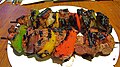 Shish kebab كباب
 -
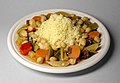 Kuskus كوسكوسي
 -
 Limau diacar ليمون مخلل
 -
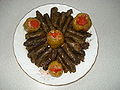 Dolma ضولمة
 -
 Lahm Ba'ajeen لحم بعجين
 -
 Manakish مناقيش
 -
 Kabsa كبسة
 -
 Kebbeh كبة-كبيبة
 -
 Ma'amoul معمول
 -
 Matboha مطبوخة
 -
 Baba Ghanoush بابا غانوج
 -
 Hummus حمصية
 -
 Shahan ful فول شاحن
 -
 Waraq Enab ورق عنب - ملفوف
 -
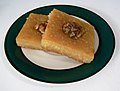 Basbousa بسبوسة
 -
 Labnah لبنة
 -
 Kanafeh كنافة
 -
 Ka'ak كعك - كحك
 -
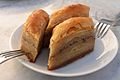 Baklawa بقلاوه
 -
 Kopi قهوة
 -
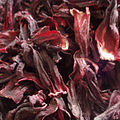 Teh Bunga Raya كركديه - عنآب
 -
 Kopi Arab قهوة عربية
 -
 Luqmat al-qadi لفمة الفاضي
 -
 Halva حلاوة
 -
 Qatayef القطائف
 -
 Shish taouk شيش طاوك
 -
 Toum تومية
 -
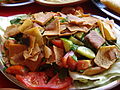 Fattoush فتوش
 -
 Sambusak سمبوسك
 -
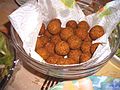 Falafel فلافل - طعمية
 -
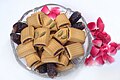 Kleicha الكليجة - كعب الغزال

.jpg)


Lihat juga[sunting | sunting sumber]


.svg)
.svg)

 |
Wikimedia Commons mempunyai media berkaitan Masakan Arab |
Rujukan[sunting | sunting sumber]
- ^ Nabeel Y. Abraham. "Arab Americans," Encarta Encyclopedia 2007. 2009-10-31.
Rencana berkaitan Masakan Arab | ||||||||||||||||||||||||||||||||||||||||||||||
|---|---|---|---|---|---|---|---|---|---|---|---|---|---|---|---|---|---|---|---|---|---|---|---|---|---|---|---|---|---|---|---|---|---|---|---|---|---|---|---|---|---|---|---|---|---|---|
| ||||||||||||||||||||||||||||||||||||||||||||||


